Share these images with your social media posts.

#Pipelines are designed, built, and operated to minimize environmental impact every step of the way. #PipelineSafety #Sustainability
#Pipelines minimize their environmental impact by selecting routes that limit impacts to sensitive areas, follow existing utility corridors, and tunnel deep beneath waterbodies. #PipelinesDeliver #Sustainability
Careful planning and 24/7 monitoring ensure #pipelines help safeguard the environments they pass through. #PipelinesDeliver #Sustainability
From route selection to 24/7 monitoring, pipelines help protect the environments and communities they serve. #PipelineSafety
Advanced leak detection, proactive inspections and maintenance help #pipelines prevent issues before they start. #PipelineSafety
How we move energy matters. #Pipelines help reduce environmental impact. #Sustainability
Environmental responsibility is part of every stage of #pipeline operations. #Sustainability
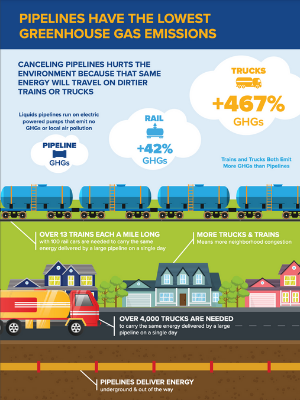
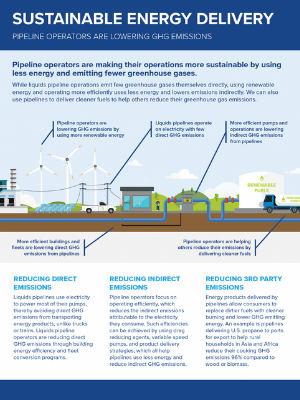
#Pipelines move energy with fewer emissions than other transportation methods. #Sustainability
Efficient #pipeline operations help lower emissions while keeping energy moving. #PipelinesDeliver #Sustainability
Pipelines connect supply and demand while helping reduce the environmental footprint of energy transportation. #PipelinesDeliver #Sustainability
#Pipelines are essential to meeting today’s energy needs responsibly. #PipelinesDeliver #Sustainability
#Pipeline infrastructure plays a key role in long-term sustainability. #PipelinesDeliver #Sustainability
#Pipelines help deliver the energy people depend on while supporting environmental responsibility. #PipelinesDeliver #Sustainability
#Pipelines help power farms, businesses, and communities while providing lower-impact energy delivery. #PipelinesDeliver #Sustainability
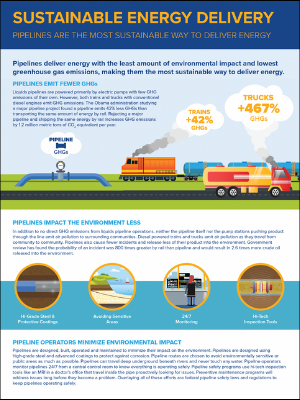
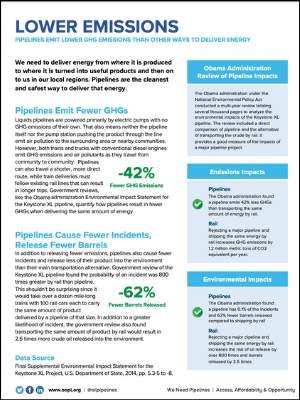
#Pipelines release fewer emissions, cause fewer incidents, and release less product into the environment than their main transportation alternative.
#Pipelines can deliver crude oil, natural gas and other energy products with significantly lower environmental impact than other forms of transportation.
We need to deliver energy from where it is produced to where it is turned into useful products and then sent to Americans who use it every day. #Pipelines are the cleanest and safest way to deliver that energy.
To fuel our homes and cars energy must be delivered from where it is produced to where it is used. #Pipelines are the safest, most efficient, and sustainable way to accomplish this.
#Pipelines use horizontal directional drilling (HDD) to protect water resources and sensitive crossings by drilling tunnels deep under bodies of water.
Horizontal drilling protects ecosystems and waterways. #Pipelines are built to safeguard nature.
#Pipeline innovations like automated shut-off valves, real-time pressure monitoring systems prevent incidents, and advanced inspection tools protect the environment and communities. #PipelineSafety
Using advanced technology, #pipeline operators can detect and respond to leaks faster, reducing the environmental impact. Efficiency and sustainability go hand in hand! #PipelineSafety #Sustainability
Innovative technology ensures #pipelines operate safely with minimal environmental impact. #PipelineSafety #Sustainability
Constant Monitoring = Constant Safety. With the help of technology, like sophisticated sensors and drones, #pipelines are monitored 24/7, ensuring any threats to the environment are identified and addressed quickly. #PipelineSafety #Sustainability
#Pipeline operators use real-time monitoring to prevent incidents and protect the environment.