Liquid Pipelines Communications graphic

Environmental Protection 2025

Social Media Graphics

Share these images with your social media posts.

Suggested Social Media Posts

🌍 This #EarthDay, remember that pipelines help reduce emissions by preventing millions of trucks from hitting the roads. #SustainableEnergy  


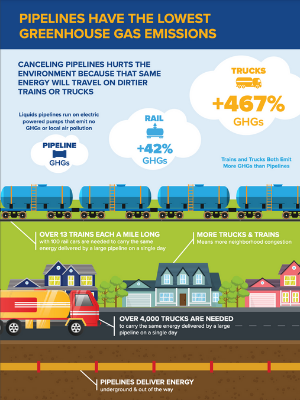
🌱 Protecting the planet starts with reducing GHGs. Pipelines emit 42% less than rail. Celebrate #EarthDay with cleaner energy.  
#Pipelines are the cleanest and safest way to deliver energy. Pipelines release fewer emissions, cause fewer incidents, and release less product into the environment than their main transportation alternative. #EarthDay
#Pipelines minimize their environmental impact by selecting routes that limit impacts to sensitive areas, follow existing utility corridors, and tunnel deep beneath waterbodies. #EarthDay
On #EarthDay, appreciate how pipelines reduce environmental risks by minimizing spills and protecting sensitive habitats.  
🚛 By reducing truck traffic, #pipelines keep our air cleaner and roads safer. A win for the planet this #EarthDay!  
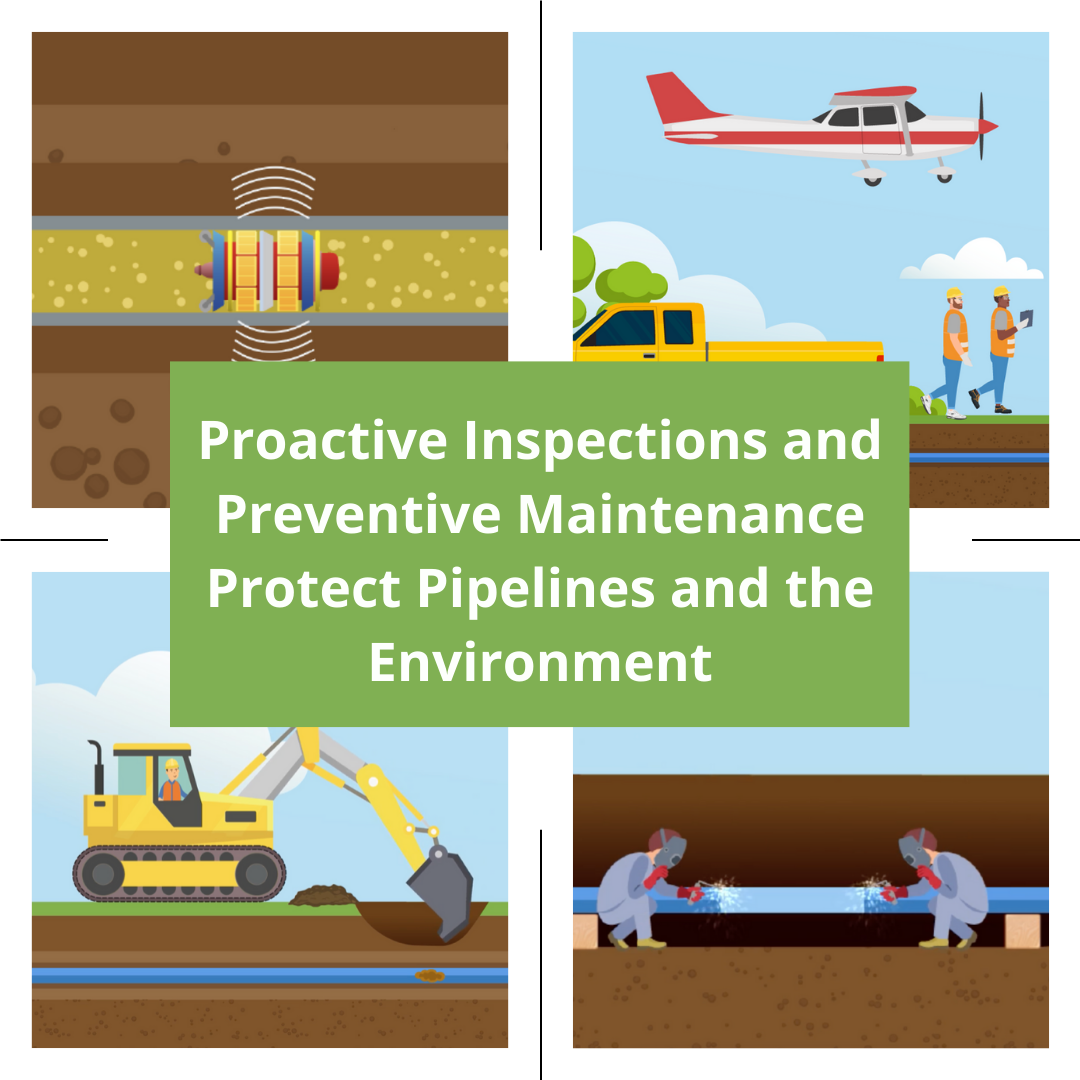
#Pipeline innovations like automated shut-off valves and real-time pressure monitoring systems prevent incidents, keeping both the environment and public safety in mind.
Using advanced technology, #pipeline operators can detect and respond to leaks faster, reducing the environmental impact. Efficiency and sustainability go hand in hand!
Innovative technology ensures #pipelines operate safely with minimal environmental impact.
Constant Monitoring = Constant Safety: With the help of technology, like sophisticated sensors and drones, #pipelines are monitored 24/7, ensuring any threats to the environment are identified and addressed quickly.

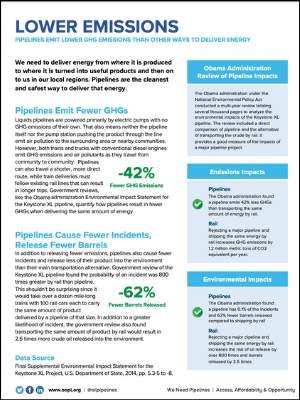
Rejecting a major #pipeline and shipping the same energy by rail increases the risk of oil release by over 800 times and barrels released by 2.6 times.

#Pipelines cause fewer incidents and release less of their product into the environment than their main transportation alternative. 
Modern #pipeline technologies use real-time monitoring to prevent incidents and protect the environment. 
#Pipelines deliver cleaner energy with fewer emissions, helping meet climate targets.

To fuel our homes and cars energy must be delivered from where it is produced to where it is used. #Pipelines are the safest, most efficient, and sustainable way to accomplish this.

#Pipelines are the safest, most efficient way to deliver energy products.
#Pipelines can deliver crude oil, natural gas and other energy products with significantly lower environmental impact than other forms of transportation.
 
 
For decades, #pipelines have been the safest and most effective means of transporting energy from where it is produced to where it is used in homes and businesses, but pipelines are also a more environmentally sound way to deliver energy than the alternatives.

We need to deliver energy from where it is produced to where it is turned into useful products and then sent to Americans who use it every day. #Pipelines are the cleanest and safest way to deliver that energy.

#Pipelines use horizontal directional drilling (HDD) to protect water resources and sensitive crossings by drilling tunnels deep under bodies of water. 

Horizontal drilling protects ecosystems and waterways. #Pipelines are built to safeguard nature. 

#Pipelines are the cleanest and safest way to deliver energy.

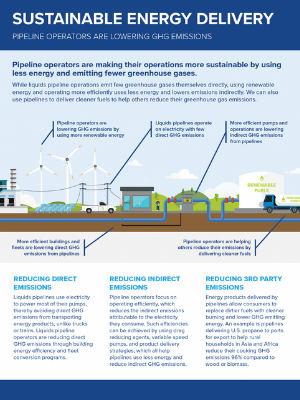
#Pipelines emit fewer greenhouse gas emissions than other ways to move liquid energy.

#Pipelines protect the environment because they emit lower GHG emissions than other ways to deliver energy. #EarthDay

Liquids #pipelines are powered primarily by electric pumps with almost no greenhouse gas emissions of their own. 

Canceling a pipeline actually results in more GHG emissions because that energy ends up delivered on trains or trucks. 

We need to deliver energy from where it is produced to where it is turned into useful products and then on to us in our local regions. #Pipelines are the cleanest and safest way to deliver that energy. 

Rejecting a major #pipeline and shipping the same energy by rail increases greenhouse gas emissions by 1.2 million metric tons of CO2 equivalent per year. 

#Pipelines can travel a shorter, more direct route, while train deliveries must follow existing rail lines, which can result in longer trips. 

Over 13 trains, each a mile long with 100 rail cars, are needed to carry the same energy delivered by a large #pipeline on a single day. 

Over 4,000 trucks are needed to carry the same energy delivered by a large #pipeline on a single day. 
🚛 #Pipelines eliminate the need for millions of truckloads, reducing emissions and protecting air quality. 

While #pipelines deliver the energy you need underground and out of the way, trucks and trains mean more neighborhood congestion to deliver the same amount of energy.

#Pipelines minimize environmental impact through habitat restoration along pipeline routes.

Operators design new #pipeline routes to avoid environmentally sensitive locations.

Additional Resources